
Hot Streak casino Plinko game
Introduction
Plinko is one of those casino formats that looks almost too simple to be interesting. A ball drops from the top of the board, bounces off pegs, lands in a slot with a multiplier, and the round ends in seconds. Yet on Hot streak casino, Plinko attracts attention for exactly that reason: it strips gambling down to a very visible chain of random outcomes. There are no reels, no paylines, no Hot Streak Casino bonus review with payment and login details maps, and no long rule sheet to decode before the first round.
From a player’s point of view, that simplicity is not the whole story. Under the clean interface sits a very specific risk model. A low-risk setup can produce a steady stream of modest returns, while a high-risk setting can turn the same board into a chase for rare but much larger multipliers. That contrast is what makes Hot streak casino Plinko worth analysing properly. The game is easy to start, but the actual session experience changes sharply depending on how the settings are used.
When I assess Plinko, I do not treat it as a novelty add-on or a trendy arcade distraction. I look at it as a distinct gambling product with its own rhythm, probability profile and practical strengths. For UK players in particular, that matters. A game can appear transparent because you can watch the ball fall, but visual transparency is not the same thing as predictability. Understanding that gap is the key to deciding whether Plinko is genuinely a good fit for your playing style.
What Plinko is and why it stands out so quickly
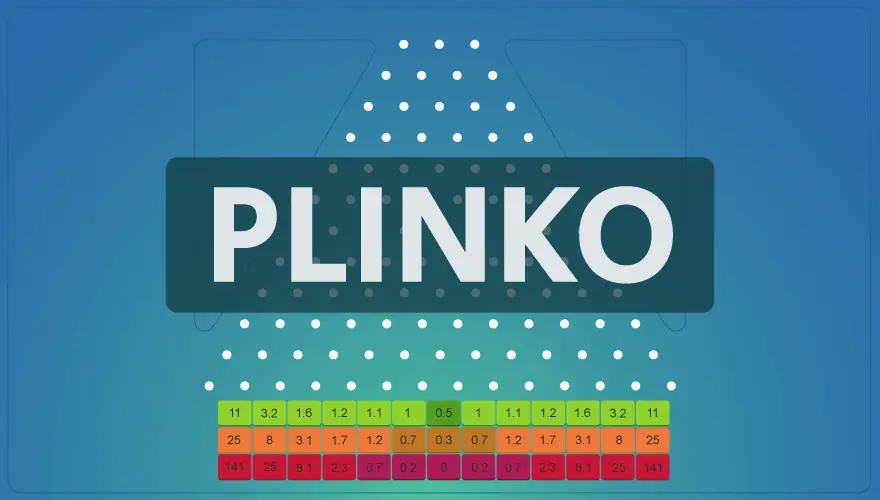
At its core, Plinko is a multiplier-based chance game built around a vertical peg board. The player chooses a stake, often selects a risk level, and in many versions also decides how many rows the board should have. Once the ball is released, it deflects left or right at each peg until it lands in one of the prize slots at the bottom. Each slot carries a fixed multiplier, and the final result is simply the stake multiplied by that value.
That sounds straightforward because it is. The reason the format became so noticeable is that it delivers instant readability. In a slot, many players need to interpret symbols, reel positions, pay mechanics, scatter triggers and feature rules. In Plinko, the outcome is visual from beginning to end. You can literally see the path unfold. That creates a stronger feeling of involvement, even though the result is still driven by random logic.
Another reason Plinko gets attention is its unusual balance between speed and suspense. Most rounds are short, but the drop itself creates a tiny arc of anticipation. There is a brief moment where the ball appears to be drifting toward a large multiplier, then kicks away at the last peg. That repeated near-miss sensation is not an accident of perception; it is part of why the game feels more dramatic than its stripped-down design might suggest.
One observation I keep returning to is this: Plinko often feels more “honest” than a slot because the whole event is visible, but emotionally it can be just as deceptive. Seeing the ball bounce does not mean the player can meaningfully read or influence the next outcome. The board looks physical. The result is still governed by preset mathematical logic. Table game fans will get more out of this review after reading Hot Streak Casino chicken road for UK players.
How the Plinko mechanics work in practice
On Hot streak casino, Plinko is typically built around a few core controls that shape the session more than new players expect. The basic elements are the stake size, the number of rows and the chosen risk level. Those settings determine the distribution of possible multipliers and the overall character of the board.
The movement logic is simple to describe. At each peg, the ball can move to one side or the other. Over many rounds, this creates a distribution where central landing zones tend to appear more often than the outer edges. The highest multipliers are usually placed at the far ends, where the path is harder to reach consistently. That is why the board can show an eye-catching top reward while still producing mainly modest or losing outcomes across a short session.
Risk level matters because it changes the multiplier layout. On lower settings, the middle of the board may contain more forgiving values, and the extremes are less dramatic. On higher settings, the distribution usually becomes sharper: more low-end results, fewer medium outcomes, and a small number of very large multipliers at the edges. In practical terms, the board stops behaving like a gentle variance game and starts acting like a high-swing chase format.
The number of rows also affects the feel of play. More rows generally mean a longer path and a broader spread of possible end positions. That can increase the sense of suspense because the ball has more chances to shift direction. It also changes the multiplier map, which is why players should not treat row count as a cosmetic setting. It alters the shape of the round and the profile of possible returns.
| Setting | What it changes | What it means for the player |
|---|---|---|
| Stake size | Value of each drop | Directly affects bankroll pressure during fast sessions |
| Risk level | Multiplier distribution | Can shift the game from steady small returns to rare high-end outcomes |
| Rows | Path length and board spread | Changes both visual pacing and the shape of possible results |
| Auto-play, if available | Round frequency | Can make losses arrive faster if limits are not set in advance |
What matters here is that Plinko is not just “drop ball, get result.” The settings define the entire session profile. Two players can launch the same title and have completely different experiences depending on whether they choose a conservative board or a high-risk setup aimed at rare multipliers.
Why the game feels engaging and how the session tempo develops
Plinko creates engagement through repetition, but not in the same way as slots. A slot round often relies on symbol alignment and the possibility of a feature trigger. Plinko relies on micro-suspense. Every drop is a tiny event with a visible path, and that path gives the brain something to track. Even when the result is mathematically routine, the movement makes it feel active.
That has a direct effect on tempo. The rounds are fast, often faster than many reel-based products, but they do not feel empty because the ball’s descent adds a brief visual pause. It is a small design detail with a big practical impact. The player gets instant resolution without the dead mechanical feel that some rapid-fire formats can produce.
There is also a psychological hook in the way edge multipliers are presented. The biggest values sit in plain sight at the bottom of the board. You always know they are there. That visibility creates a stronger chase impulse than many standard Hot Streak Casino games, where top outcomes are buried in abstract paytables. In Plinko, the target is always on screen.
A second observation worth noting: Plinko can make a short losing run feel strangely “close” to success because several drops may bounce near premium slots without landing in them. That sense of almost getting there can stretch a session longer than the player intended. It is one of the format’s most understated pressure points.
How risky Plinko really is and who tends to enjoy it most
Plinko can range from relatively controlled to highly aggressive depending on its settings. That is why broad statements about the game being safe, volatile or balanced are not very useful on their own. The right question is: under which configuration? On low-risk settings, the board often produces more central landings and a gentler return pattern. On high-risk settings, the distribution can become severe enough that long dry spells are not unusual.
For the player, this means the game should be approached as a configurable risk product. It is not enough to look at the maximum multiplier and assume that tells the whole story. A top reward may be technically available while the majority of rounds still return very little. If the board is tuned toward rare edge hits, the bankroll can erode quickly before any standout result appears.
Plinko tends to suit players who like short, self-contained rounds and who are comfortable with visible randomness. It can also appeal to those who prefer controlling session parameters directly instead of waiting for a slot’s bonus structure to take over. On the other hand, players who enjoy layered features, expanding symbols, free spins or narrative progression may find Plinko too stripped back after the first burst of curiosity.
In my experience, the format works best for players who understand variance emotionally, not just intellectually. It is one thing to know that a high-risk board may produce long weak stretches. It is another thing to sit through them while the large multipliers remain constantly visible at the edges.
What to understand about probabilities, outcomes and real session behaviour
One of the most important things to grasp before launching Hot streak casino Plinko is that visible movement does not equal readable probability. The ball’s path may look like a chain of physical bounces, but the practical reality for the player is still a probability distribution. Some landing zones are naturally more common than others, and the board is designed around that imbalance.
Central slots usually appear more often because there are more possible paths leading toward the middle than toward the extremes. That is not a flaw in the game; it is the structural basis of the format. The outermost slots, where the highest multipliers are often placed, are rarer by design. This is why a board can display an attractive headline multiplier without behaving generously in ordinary play.
Players should also understand that short sessions can be misleading in both directions. A lucky early hit can make the format seem softer than it is, while a cold opening stretch can make it look harsher than its long-term model suggests. Plinko is highly sensitive to sample size because each round is so quick and each result is so discrete.
Do not judge the board by the first ten or twenty drops. The session may feel decisive very quickly, but that feeling is often false.
Treat high-risk settings as bankroll-intensive. They are built for spikes, not for smooth continuity.
Remember that frequent small returns are not the same as profit. Low multipliers can create activity without actually offsetting total spend.
A third observation that separates Plinko from many casual-looking formats is how sharply it exposes the difference between entertainment value and expected value. The board can remain fun to watch even while the session is objectively running against the player. That split is easy to miss if you focus only on the visual side of the experience.
How Plinko differs from slots and other common casino formats
The clearest difference between Plinko and classic online slots is structural. Slots are built around reel outcomes, symbol combinations and often layered bonus systems. Plinko is built around direct multiplier resolution. There is no need to wait for three scatters, unlock a bonus round or follow a payline map. The result is immediate and visible.
Compared with roulette, Plinko shares the appeal of simple outcomes and fast rounds, but the presentation is very different. Roulette feels table-based and numeric. Plinko feels kinetic. The ball path creates a stronger illusion of unfolding drama, even when the underlying randomness serves a similar role.
Compared with crash-style products, Plinko is less about timing and more about acceptance of the final landing point. The player does not cash out manually at a chosen moment. That makes it more passive in one sense, but also more straightforward. There is no decision point mid-round to complicate the result.
| Format | Main appeal | Key difference from Plinko |
|---|---|---|
| Classic slots | Features, themes, bonus rounds | More layered, less visually transparent per round |
| Roulette | Simple betting structure | Less visual motion, more table logic than path-based suspense |
| Crash games | Cash-out timing tension | Player decision during round is central, unlike Plinko |
| Dice-style multiplier games | Fast mathematical resolution | Plinko adds visible trajectory and stronger near-miss perception |
This is why I would not group Plinko with slots simply because it sits in the same casino lobby. The user experience is different. The decision-making is different. Even the emotional rhythm is different.
Practical strengths and weaker points of the format
Plinko’s biggest strength is clarity. A new player can understand the basic premise almost instantly. That lowers the barrier to entry and makes it easier to test different approaches without learning a dense rulebook. On Hotstreak casino, that kind of direct usability is a genuine advantage for players who want to focus on the round itself rather than the interface.
Another strength is flexibility. Risk settings and board size can materially change the character of play. This gives the format more range than it first appears to have. A player can aim for a calmer session or deliberately choose a sharper payout curve.
There is also value in the pace. Plinko is efficient. It can fit short sessions well because the rounds resolve quickly and the feedback is immediate. For some players, that is more practical than committing to long slot cycles waiting for bonus features that may never arrive.
The weaker side is repetition. Because the core action never changes, the format can become monotonous for players who need progression, thematic immersion or evolving feature sets. The board may remain tense, but it does not develop in the way many modern slots do.
Another limitation is that the visual simplicity can hide bankroll pressure. Fast rounds plus configurable risk can escalate spend more quickly than expected, especially if auto-play is used without a fixed stop point. This is not unique to Plinko, but the stripped-back design can make it easier to underestimate.
Strong points: easy to grasp, quick to play, transparent layout, adjustable session style.
Limitations: can feel repetitive, high-risk modes can be punishing, visible top multipliers may encourage unhelpful chasing behaviour.
What to check before starting a Plinko session
Before playing Hot streak casino Plinko, I would focus less on the headline multiplier and more on the board setup. Start by checking the available risk levels and whether the row count can be changed. Those two controls tell you far more about the likely session experience than a promotional number attached to the top prize.
It is also worth deciding in advance what kind of session you want. If the goal is to explore the format, a lower-risk configuration makes more sense because it lets you observe the board behaviour without turning every drop into a high-pressure event. If the goal is specifically to chase larger multipliers, then the player should accept that the return pattern may become much harsher.
A demo mode, where available, can be genuinely useful here. Not because it predicts future results, but because it shows how the board feels at different settings. Plinko is one of those games where emotional response matters. A setup that seems attractive on paper may feel frustrating after a few minutes if the rhythm does not match the player’s tolerance for dry spells.
I would also suggest setting a round limit or loss limit before starting. Because each drop resolves quickly, sessions can move faster than they feel. The board gives enough visual engagement to blur time, and that is exactly when discipline becomes more important than intuition.
Final verdict on Hot streak casino Plinko
Hot streak casino Plinko offers a very specific kind of gambling experience: fast rounds, visible randomness, adjustable risk and a clean interface that reveals the outcome path in real time. Its main strength is not just simplicity, but the way that simplicity translates into immediate, readable play. You always know what the round is, what the target areas are and how the result has landed.
That said, the format should not be mistaken for a soft or casual option just because it looks minimal. The real character of Plinko depends heavily on its settings. Low-risk boards can feel controlled and steady. High-risk boards can become brutally swingy, with long stretches of weak returns interrupted by occasional spikes. For the player, that means caution matters most when the game seems easiest to understand.
I would recommend Plinko to players who enjoy short-form sessions, direct result visibility and the ability to shape the tone of play through risk selection. I would be less likely to recommend it to those who want deep bonus structures, story-led presentation or a more varied long-session arc. In simple terms, Plinko is not trying to be a slot with extra polish. It is a probability-driven drop game that turns randomness into something you can watch unfold.
That is exactly why it works for some players and falls flat for others. If you want a compact, high-clarity format where every round is immediate and the tension sits in the landing path, Plinko has real value. If you need evolving features or more strategic input, another format will probably suit you better. The smart approach is to judge it not by its trend value, but by whether its rhythm, variance and visual style actually match the way you like to play.
FAQ
How does Plinko work in the game lobby?
A ball drops from the top and bounces through the board before landing in a payout slot. Multipliers are tied to the slot it lands in.
What risk level should be expected from Plinko multipliers?
Plinko results are driven by where the ball ends, so the multiplier outcomes can vary quickly from round to round. Higher multipliers are not guaranteed and may appear more or less often depending on the sequence of outcomes.
How to launch a Plinko round in real-money mode after signing in?
Log in via casino login, then select Plinko from the games section and choose the real-money option. Enter the stake for the round and confirm the ball drop to start the game.
What is the main difference between playing Plinko in demo mode and real-money play?
Demo mode uses virtual balance for practice, while real-money play credits outcomes to the casino account. The ball-bounce mechanics stay the same.
Does Hot Streak Plinko use tables like live casino games, or is it single-game rounds?
Hot Streak Plinko is played as single rounds where each ball drop decides the multiplier.
What bonus-related limits could affect Plinko if a promo or free spins offer is active?
Some promotions apply only to specific games or have wagering requirements tied to the bonus terms. Before playing, check the promotion rules shown in the bonus area of the account to confirm whether Plinko qualifies and what limits apply.